
About us
Origin and Growth
How a vocation sparked in London became a monastery on a Kerala hill.
“Leave your country, your people and your father’s household and go to the land I’ll show you” (Gen. 12:1). The proximate reason for the establishment of Kurisumala Ashram was John Mahieu’s response to this divine call. John, later Francis Acharya, was Belgian by birth, yet the seeds of the vocation that culminated in the oblation of his life at Kurisumala as a true Indian were sown by none other than the father of the nation, Mahatma Gandhi. This took place during the days of the Round Table Conference in London, where John was a student at the time.
From Belgium to Vagamon
After making his profession at the Cistercian (Trappist) monastery in Scourmont, Belgium, he followed a persistent call to India and set foot in this “cradle of monasticism” in 1955. After an extensive “stay-and-study” at major Indian ashrams, he stayed briefly with the founders of Saccidananda Ashram (Shantivanam) in Tiruchirappalli. Eventually he accepted the invitation of Zacharias Mar Athanasios, then Bishop of the Syro-Malankara Diocese of Tiruvalla, and officially established Kurisumala Ashram near Vagamon on March 21, 1958, in the company of Fr. Bede Griffiths, an English Benedictine monk, and a couple of aspirants.
A koinonia on the hill
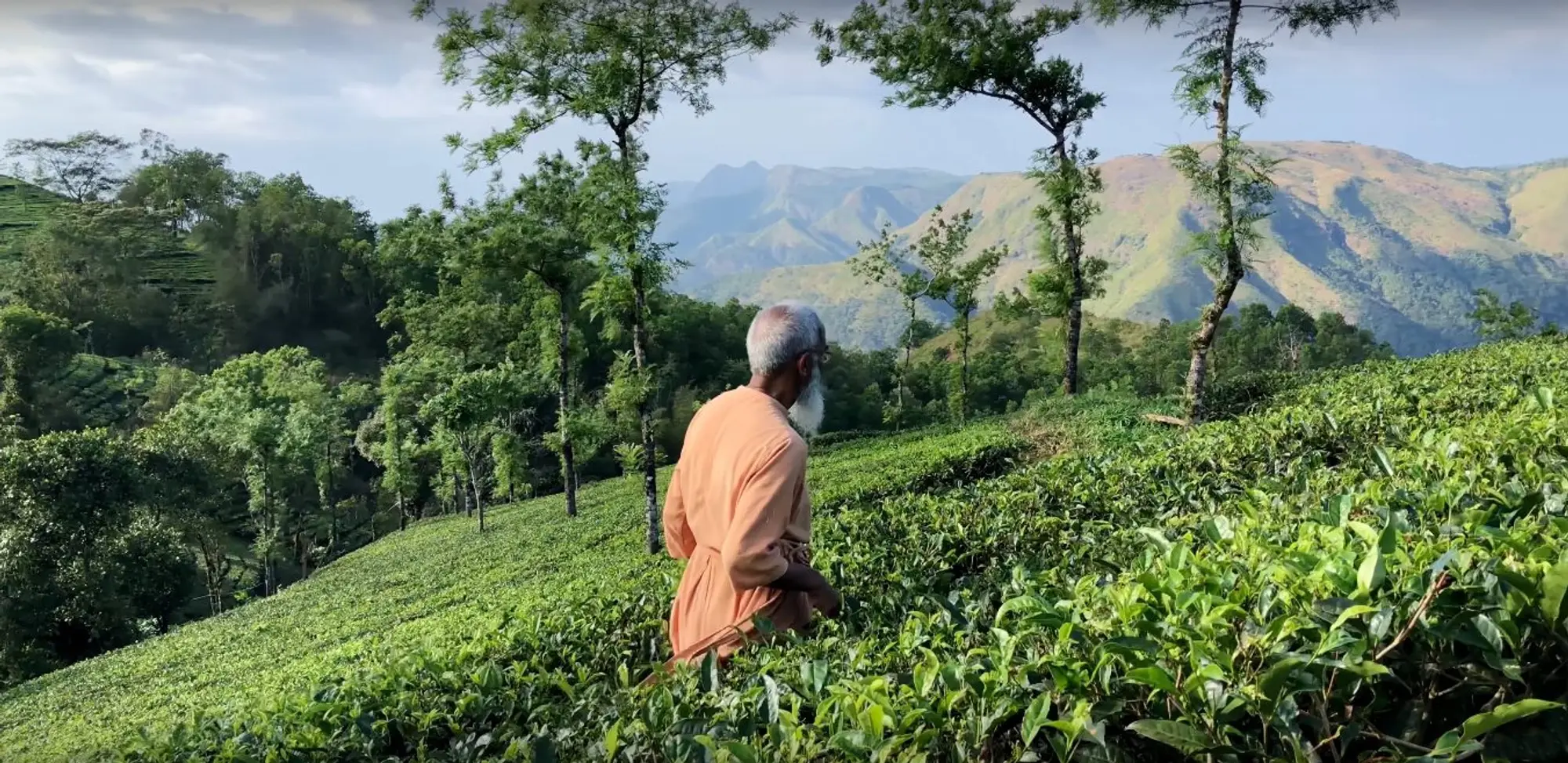
Enveloped by the elements in the shadow of the cross, this small nucleus grew into a koinonia of fifteen in three years, under the watchful eyes of Fr. Francis, who was their father, mother, confidant and guru. Of the scenic beauty of Kurisumala’s surroundings he wrote:
The sparkling jewels of the highlands of Kerala,
A land of grassy slopes with flowers of many hues,
With glades where fair trees dance in the wind…
The pioneers of Kurisumala Ashram bent their backs and shed the sweat of their brows, and soon turned this beautiful but infertile tract of land into a veritable paradise of green pastures, flower gardens and vegetable beds. Stone barriers were raised to protect crops and conserve soil, trees were planted, terraces built, dams constructed. The face of the earth was renewed.
In the course of time simple stone buildings were erected for the church, living quarters and guest-houses. A herd of cows was raised from scratch, and soon a dairy farm was operational. It served the dual purpose of providing a livelihood for the community and supporting the poor families nearby. Within ten years this agricultural development and the establishment of a cattle-breeding centre gave the Ashram the image of the Promised Land for many, a land flowing with milk and honey.
Milestones along the way
Immersed in the regular monastic milieu of prayer, work and spiritual reading, this small band of sadhakas, brahmacharis and sannyasis continued to cross milestones: Fr. Francis’s Indian citizenship, Fr. Bede’s departure to Shantivanam as its superior, Fr. Francis’s shashtiabdapurti and his taking of the title of Acharya, and the introduction of the Bharatiya Pooja.
In 1998 the Ashram was incorporated into the Order of the Cistercians of Strict Observance, a worldwide contemplative order with its Generalate in Rome, with the status of an autonomous Abbey. Tarrawarra Abbey in Australia “adopted” Kurisumala as its daughter-house.
Fr. Francis Acharya, who was blessed as Abbot in 1999, passed away on January 31, 2002, and Fr. Yesudas Thelliyil was blessed as the second Abbot of Kurisumala on March 20, 2002.
The fiftieth anniversary of the foundation was completed and celebrated on January 31, 2008.
Having completed 75 years of age, with twelve years in the abbatial ministry, Fr. Yesudas resigned. Fr. Ishanand was blessed as our third Abbot on April 7, 2014.
Trusting in the grace of God and in the intercession of many here and above, especially that of Our Lady, we look with eyes of hope towards the future.